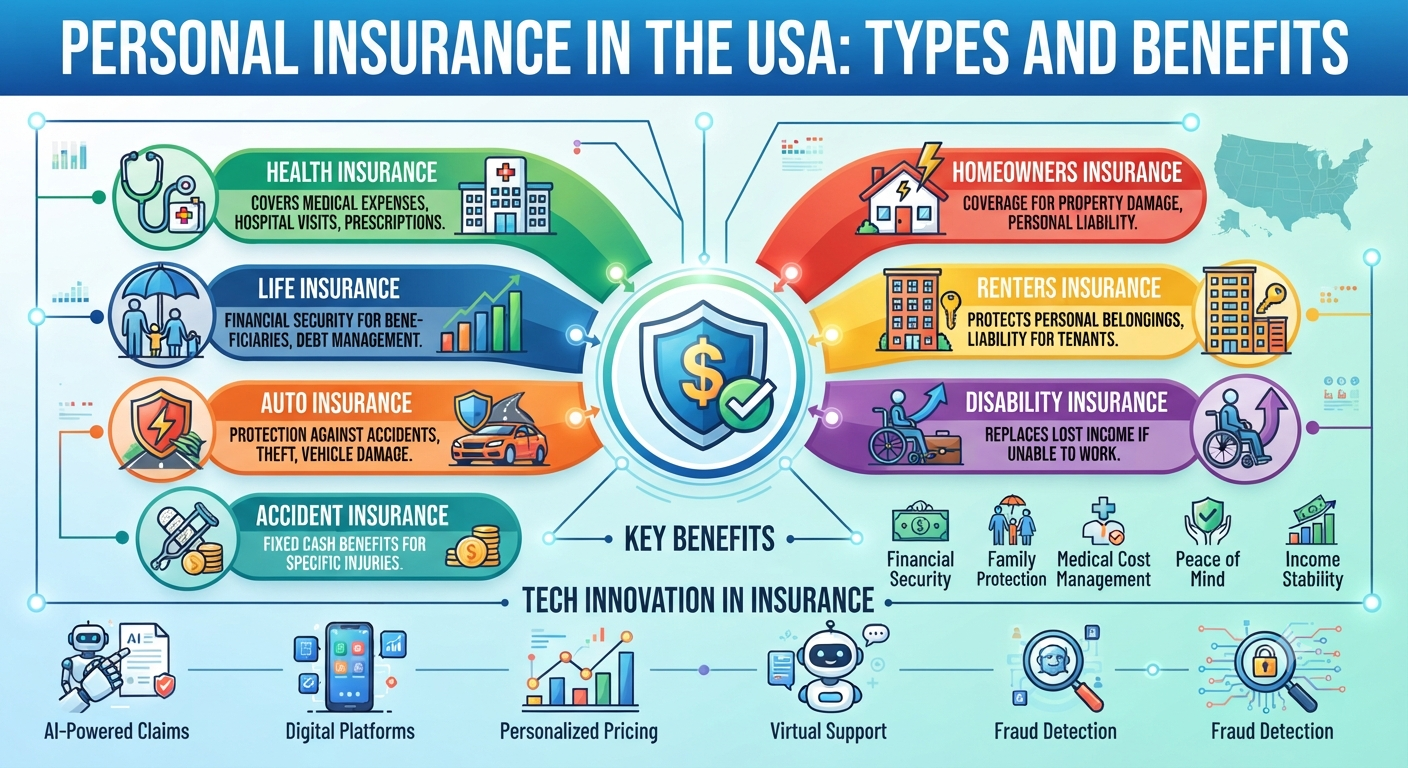
Personal Insurance in the USA: Types and Benefits
Life is full of unexpected situations, and protecting yourself and your family financially is an important part of long-term planning. In the United States, personal insurance plays a major role in helping individuals manage financial risks related to health, accidents, property damage, disability, and unexpected life events.
With rising living expenses and increasing financial responsibilities, having suitable insurance coverage can provide valuable protection and peace of mind.
Whether you are a working professional, a homeowner, a parent, or someone planning for the future, understanding personal insurance can help you make smarter financial decisions.
1. What Is Personal Insurance?
Personal insurance refers to different types of insurance policies designed to protect individuals and families against unexpected financial losses.
Policyholders generally pay regular premiums to an insurance company in exchange for financial protection against specific covered risks.
Personal insurance may provide protection for:
- Health Expenses: Helps cover eligible medical treatments, hospital visits, prescription medications, and preventive healthcare.
- Life Protection: Provides financial benefits to designated beneficiaries after the insured person’s death.
- Property Damage: Helps protect homes and personal belongings against specified risks such as fire, theft, and certain natural disasters.
- Accidental Injuries: Provides financial benefits for covered injuries resulting from unexpected accidents.
- Income Protection: Disability insurance can replace a portion of lost income when a qualifying condition prevents someone from working.
The exact benefits depend on the policy, coverage limits, exclusions, and eligibility requirements.
2. Different Types of Personal Insurance in the USA
There are several personal insurance options available in the United States. Each type serves a different financial protection purpose.
Health Insurance
Health insurance helps individuals manage the cost of healthcare services. Depending on the policy, coverage may include doctor visits, hospital treatment, preventive services, specialist consultations, and prescription medications.
Life Insurance
Life insurance provides financial support to beneficiaries when the insured person passes away. It can help families manage mortgage payments, household expenses, outstanding debts, and future education costs.
Auto Insurance
Auto insurance protects vehicle owners against certain financial losses resulting from accidents, theft, and covered vehicle damage. Liability coverage is required in most states, although specific requirements vary.
Homeowners Insurance
Homeowners insurance helps protect residential properties and personal belongings against covered events. Many policies also include personal liability protection.
Renters Insurance
Renters insurance provides protection for tenants’ personal belongings and may include liability coverage and additional living expenses following certain covered events.
Disability Insurance
Disability insurance replaces a portion of an individual’s income if a qualifying illness or injury prevents them from working. It can help maintain financial stability during recovery.
Accident Insurance
Accident insurance provides fixed cash benefits for specified accidental injuries. These benefits can help policyholders manage medical deductibles and other unexpected expenses.
3. Why Is Personal Insurance Important?
Personal insurance helps individuals prepare financially for situations that may otherwise create significant economic pressure.
Some important benefits include:
- Financial Security: Helps reduce the financial impact of unexpected accidents, illnesses, and property damage.
- Family Protection: Life insurance can provide financial support to loved ones after the insured person’s death.
- Medical Cost Management: Health insurance helps make eligible healthcare services more affordable.
- Income Stability: Disability coverage can provide financial assistance when a person cannot work because of a qualifying condition.
- Peace of Mind: Having suitable insurance coverage can make unexpected situations easier to manage.
Insurance does not eliminate every financial risk, but it can help protect individuals from certain major losses.
4. How Much Does Personal Insurance Cost?
The cost of personal insurance in the United States depends on the type of policy, coverage level, provider, and individual circumstances.
Some important factors affecting premiums include:
- Age: Age can influence premiums for several types of personal insurance.
- Location: Insurance costs may vary between states, cities, and ZIP codes.
- Coverage Amount: Higher coverage limits generally result in higher premiums.
- Personal Risk Factors: Driving history, property characteristics, and other relevant factors may influence pricing.
- Deductibles: Selecting a higher deductible can reduce certain premiums but increase out-of-pocket expenses when making a claim.
- Policy Features: Additional benefits and optional coverage can increase the overall cost.
Comparing multiple insurance providers can help individuals identify policies that offer suitable protection within their budgets.
5. How to Choose the Right Personal Insurance Plan
Choosing suitable insurance requires understanding your current financial responsibilities and future needs.
Consider these important factors before purchasing a policy:
- Evaluate Your Needs: Identify the risks you want to protect yourself and your family against.
- Compare Insurance Providers: Review premiums, coverage options, customer service, and policy conditions.
- Check Coverage Limits: Make sure the policy offers sufficient financial protection.
- Understand Exclusions: Review situations and expenses that are not covered.
- Review Deductibles: Understand how much you may need to pay before certain benefits apply.
- Consider Your Budget: Choose coverage that provides meaningful protection without creating unnecessary financial pressure.
The right insurance plan should match your personal circumstances rather than simply offering the lowest monthly premium.
6. How AI and Technology Are Changing Personal Insurance
The insurance industry is becoming increasingly digital. Artificial intelligence, automation, and data analytics are changing how insurance companies manage policies and serve customers.
Some important developments include:
- AI-Assisted Claims Processing: Automated systems can help review submitted documents and identify potential errors.
- Digital Insurance Platforms: Mobile applications allow customers to manage policies, pay premiums, and track claims.
- Personalized Insurance Pricing: Data analytics can help insurers assess certain risk factors and develop customized pricing models.
- Virtual Customer Support: Digital assistants provide convenient access to basic policy information and customer assistance.
- Fraud Detection: AI-powered systems can help identify unusual claims activity and potential insurance fraud.
These innovations are helping insurance companies improve administrative efficiency and provide more convenient customer experiences.
Final Thoughts
Personal insurance is an important part of financial planning in the United States. From protecting your health and income to safeguarding your home, vehicle, and family, suitable insurance coverage can help reduce the financial impact of unexpected events.
Before selecting a policy, compare insurance providers, review coverage limits, understand exclusions, and consider your long-term financial responsibilities.
Ultimately, the right combination of personal insurance policies can help individuals and families build stronger financial protection and enjoy greater peace of mind.