Vehicle Insurance in the USA: Coverage and Benefits
Owning a vehicle in the United States comes with important financial responsibilities, and vehicle insurance is one of the most essential. Whether you drive a car, truck, or SUV, having appropriate insurance coverage can protect you against unexpected expenses resulting from accidents, theft, property damage, and other covered incidents.
With increasing vehicle repair costs, changing insurance rates, and different state requirements, understanding how vehicle insurance works is important for every driver.
Whether you are a first-time car owner, a daily commuter, or a family managing multiple vehicles, choosing the right insurance policy can help protect your finances and provide peace of mind.
1. What Is Vehicle Insurance?
Vehicle insurance is a financial protection policy that helps cover certain expenses resulting from vehicle accidents, damage, theft, and liability claims.
In exchange for regular premium payments, an insurance company agrees to provide financial benefits for covered events according to the policy terms.
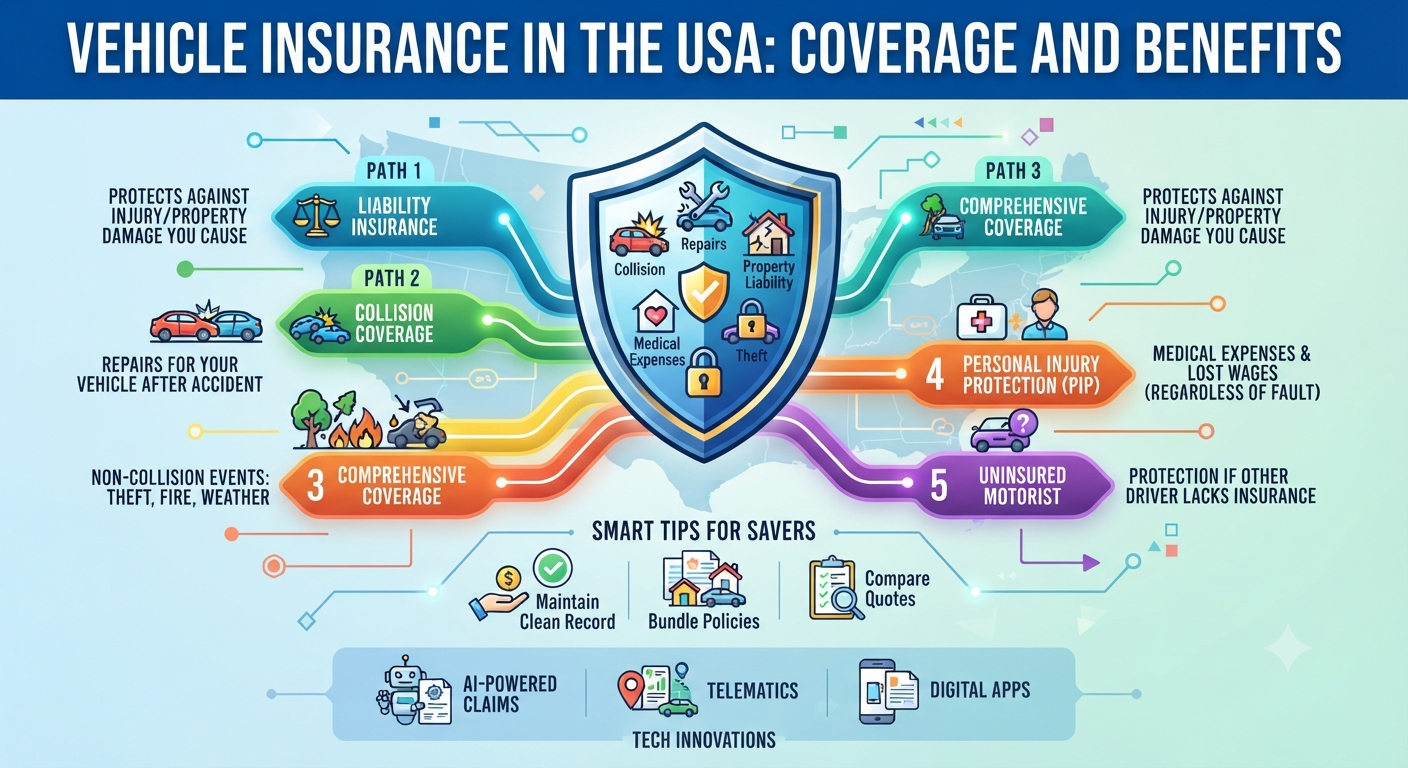
Common benefits may include:
- Accident Protection: Helps cover eligible expenses resulting from vehicle collisions.
- Property Damage Liability: Covers damage you cause to another person’s vehicle or property, subject to policy limits.
- Medical Expenses: Certain coverage options help pay eligible medical expenses resulting from vehicle accidents.
- Theft Protection: Comprehensive coverage may help pay for losses if your insured vehicle is stolen.
- Vehicle Repairs: Depending on the policy, insurance may help pay for repairs following covered accidents or other damage.
2. Different Types of Vehicle Insurance Coverage
Vehicle insurance policies offer different types of protection. Understanding these options can help drivers choose suitable coverage.
Liability Insurance
Liability insurance helps pay for injuries or property damage you cause to others in an accident for which you are legally responsible. Many US states require drivers to maintain minimum liability coverage.
Collision Coverage
Collision insurance helps pay for repairs to your vehicle when it is damaged in a collision with another vehicle or object, regardless of who caused the accident, subject to policy terms.
Comprehensive Coverage
Comprehensive insurance protects against certain non-collision events, including theft, vandalism, fire, falling objects, and some weather-related damage.
Personal Injury Protection (PIP)
Personal Injury Protection helps cover eligible medical expenses and certain other accident-related losses, regardless of fault. It is required in some states and optional in others.
Uninsured and Underinsured Motorist Coverage
This coverage can provide financial protection when you are involved in an accident with a driver who has no insurance or insufficient coverage.
3. How Much Does Vehicle Insurance Cost in the USA?
Vehicle insurance premiums vary depending on several factors. There is no single price that applies to every driver.
Important factors affecting insurance costs include:
- Driving History: Drivers with accidents, traffic violations, or previous claims may pay higher premiums.
- Age and Experience: Younger and less experienced drivers often face higher insurance costs.
- Vehicle Type: Expensive vehicles, sports cars, and vehicles with costly replacement parts may have higher premiums.
- Location: Insurance rates differ between states, cities, and ZIP codes.
- Coverage Level: Policies with higher limits and additional protection generally cost more.
- Deductibles: Choosing a higher deductible may reduce premiums but increase the amount you pay when making a claim.
Comparing multiple insurance providers can help drivers find coverage that fits their needs and budget.
4. How to Choose the Right Vehicle Insurance Policy
Selecting vehicle insurance requires more than finding the cheapest monthly premium. Drivers should consider the protection offered by each policy.
Here are some important points to review:
- Understand State Requirements: Check the minimum insurance coverage required in your state.
- Compare Insurance Quotes: Request quotes from multiple companies before making a decision.
- Review Coverage Limits: Make sure your policy offers sufficient financial protection.
- Check Deductibles: Understand how much you will need to pay before certain insurance benefits apply.
- Consider Your Vehicle’s Value: Comprehensive and collision coverage may be especially useful for newer or more valuable vehicles.
- Review Customer Service: Look at the insurer’s claims process, financial strength, and customer feedback.
The right policy should balance affordable premiums with meaningful financial protection.
5. How to Save Money on Vehicle Insurance
Vehicle insurance can represent a significant monthly expense, but several strategies may help reduce premiums.
- Maintain a Clean Driving Record: Safe driving habits can help you qualify for better insurance rates.
- Compare Annual Quotes: Reviewing different providers can help identify competitive pricing.
- Ask About Discounts: Some insurers offer discounts for safe driving, multiple vehicles, bundled policies, or eligible vehicle safety features.
- Choose an Appropriate Deductible: A higher deductible may lower your premium if you can comfortably afford the additional out-of-pocket expense.
- Review Your Coverage Regularly: Make sure you are not paying for unnecessary coverage while maintaining adequate protection.
- Consider Bundling Policies: Combining eligible home and auto insurance policies with one provider may offer savings.
Always check the conditions attached to discounts because eligibility varies between insurance companies.
6. How Technology and AI Are Changing Vehicle Insurance
Technology is transforming the vehicle insurance industry by improving customer services, risk assessment, and claims management.
Some important developments include:
- AI-Powered Claims Processing: Artificial intelligence can help review accident photographs, repair estimates, and supporting documents.
- Telematics and Usage-Based Insurance: Certain insurers use driving data, such as mileage and driving behaviour, to offer personalized insurance pricing.
- Digital Insurance Applications: Mobile apps allow customers to access policy documents, make payments, and report accidents.
- Automated Damage Assessment: Advanced image recognition tools can help insurers evaluate vehicle damage and estimate repair costs.
- Real-Time Customer Support: Digital assistants and online platforms make it easier for drivers to access insurance information.
These technologies are helping insurance companies improve efficiency and provide more convenient services to policyholders.
Final Thoughts
Vehicle insurance is an essential part of responsible vehicle ownership in the United States. It helps protect drivers against unexpected financial losses and provides coverage for various accident-related risks.
Before selecting a policy, compare insurance providers, review state requirements, understand coverage limits, and evaluate deductibles.
The best vehicle insurance plan is not necessarily the cheapest one. It is the policy that provides appropriate protection at a price that fits your financial situation.
By choosing suitable coverage and maintaining safe driving habits, vehicle owners can protect their vehicles, finances, and long-term peace of mind.