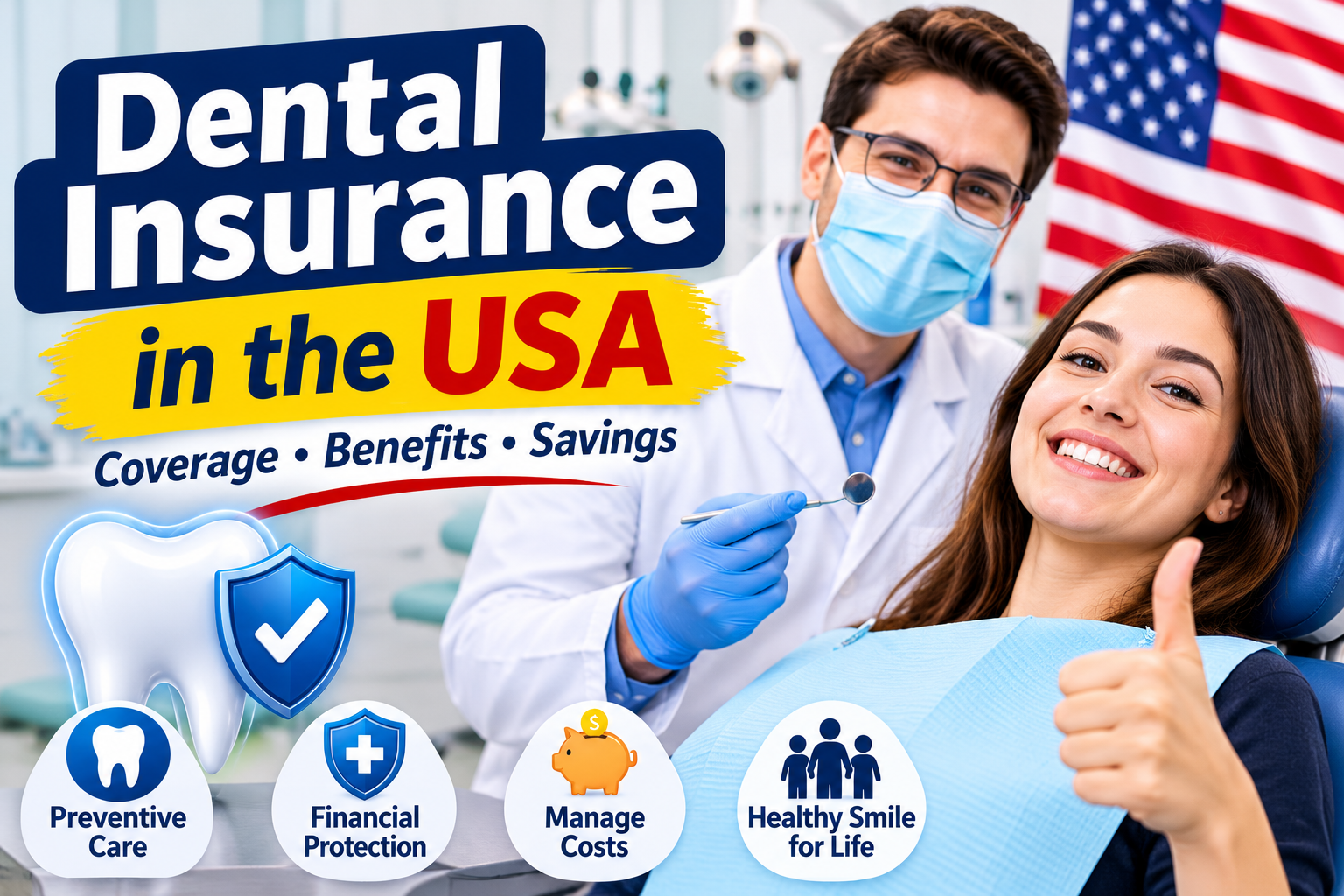
Dental Insurance in the USA: Coverage and Benefits
Maintaining good oral health is an important part of overall well-being, but dental treatments in the United States can be expensive. From routine dental checkups to fillings, root canals, and major procedures, the cost of dental care can create financial pressure for individuals and families.
Dental insurance helps reduce these expenses by covering a portion of eligible dental treatments. Whether you are an individual, a family, or a business owner offering employee benefits, understanding how dental insurance works can help you make better healthcare and financial decisions.
1. What Is Dental Insurance?
Dental insurance is a type of coverage designed to help pay for preventive, basic, and major dental services. Policyholders generally pay a monthly or annual premium in exchange for financial assistance with eligible dental treatments.
Depending on the plan, dental insurance may cover:
- Routine dental examinations and consultations.
- Professional teeth cleaning and preventive care.
- Fillings and treatment for cavities.
- Root canals and tooth extractions.
- Crowns, bridges, and other restorative procedures.
- Certain orthodontic treatments, depending on the policy.
Coverage limits, waiting periods, deductibles, and exclusions vary between insurance providers.
2. Understanding the Different Types of Dental Coverage
Dental insurance plans generally provide different levels of coverage depending on the type of treatment.
- Preventive Care: Includes routine examinations, cleanings, and eligible X-rays. Many plans cover preventive services at 100% when in-network.
- Basic Procedures: Includes fillings, simple extractions, and certain treatments for gum disease. These services are often covered partially.
- Major Procedures: Includes crowns, bridges, dentures, and root canals. Coverage is usually subject to higher cost-sharing and plan limits.
- Orthodontic Coverage: Some plans help pay for braces and other orthodontic treatments, although coverage may have separate limits and eligibility requirements.
Understanding these categories can help you estimate how much you may need to pay for dental treatment.
3. How Much Does Dental Insurance Cost in the USA?
The cost of dental insurance depends on several factors, including the insurance company, location, coverage level, and number of people included in the policy.
Common expenses include:
- Monthly Premiums: The regular amount paid to maintain dental insurance coverage.
- Deductibles: The amount policyholders must pay before certain benefits become available.
- Co-payments and Coinsurance: The fixed amount or percentage paid by the patient for covered services.
- Annual Maximums: The maximum amount the insurance company will generally pay toward covered dental services during a plan year.
Some plans also have waiting periods before major dental procedures become eligible for coverage.
4. Individual vs. Family Dental Insurance
Choosing between individual and family dental insurance depends on household needs and expected dental expenses.
Individual Dental Insurance
Individual plans are designed for one person and can help cover routine dental checkups, cleanings, fillings, and other eligible procedures.
Family Dental Insurance
Family plans provide coverage for multiple household members under one policy. They may include benefits for adults and children, although orthodontic and other specialized services can have additional restrictions.
Before selecting a plan, compare the total premium, family deductible, annual maximum, and coverage available for each member.
5. How to Choose the Right Dental Insurance Plan
Selecting an appropriate dental insurance policy requires more than comparing monthly premiums. It is important to understand what the plan actually covers.
Consider these important factors:
- Network Dentists: Check whether your preferred dentist participates in the insurance provider’s network.
- Annual Maximum: Review how much the insurer will pay toward covered services each year.
- Waiting Periods: Find out whether you must wait before receiving benefits for basic or major procedures.
- Preventive Benefits: Look for plans that provide good coverage for routine checkups and cleanings.
- Pre-existing Dental Conditions: Review how the policy treats existing dental problems and previously recommended treatments.
- Out-of-Pocket Expenses: Compare deductibles, coinsurance, and exclusions before enrolling.
A plan with a low monthly premium may not always be the most affordable option if it has limited benefits or high treatment costs.
6. Dental Insurance and Modern Healthcare Technology
Technology is changing how dental insurance companies and dental practices manage patient services and insurance claims.
Some important developments include:
- Digital Claims Processing: Online systems make it easier for dental offices to submit insurance claims and track their status.
- AI-Assisted Dental Diagnostics: Artificial intelligence can help dentists analyze dental X-rays and identify potential oral health concerns.
- Virtual Dental Consultations: Tele-dentistry allows patients to discuss certain dental concerns remotely.
- Online Benefit Management: Many insurance providers offer digital portals where members can review coverage, check claims, and access policy information.
- Cost Transparency Tools: Digital platforms can help patients review estimated treatment costs before scheduling procedures.
These technologies are helping improve convenience, communication, and administrative efficiency across the dental healthcare industry.
Final Thoughts
Dental insurance is an important consideration for individuals and families who want to manage the cost of maintaining good oral health in the United States.
From preventive checkups to restorative treatments, the right policy can reduce out-of-pocket expenses and make dental care more financially manageable.
Before choosing a plan, compare premiums, annual maximums, waiting periods, dentist networks, and treatment coverage. Understanding these details can help you find dental insurance that matches your healthcare needs and budget.
Ultimately, investing in suitable dental coverage can support better oral health while providing greater financial confidence for the future.